


I was so looking forward to travelling to Australia to visit my best man for the first time in 25 years. But shortly after arriving in Sydney, I became seriously unwell. Within two days, I was rushed to hospital, where a scan revealed I had spinal sepsis. I underwent emergency surgery almost immediately.
In total, I had eleven operations. Initially, I was almost completely paralysed and only able to move my right arm. I spent weeks lying flat on my back, far from home, with no clear sense of what the future might hold.
Life quickly became a relentless cycle of surgery and recovery. The determination of the medical team was extraordinary and their focus was simple: eliminate the infection and keep me alive. I know I’m lucky, truly lucky, to still be here.
Life hadn’t always looked this way. I spent 33 years in the Royal Navy, serving across the Caribbean, Persian Gulf and Indian Ocean. From my early days on frigates and destroyers to later advising on global operations at the Ministry of Defence, it was a varied and rewarding career. Along the way, I was also very proud to complete my Master’s degree at King’s College London.
Family has always been at the centre of my life too. I live on Exmoor in Somerset and my son and two-year-old grandson aren’t far away, whilst my daughter lives with her partner in London. Before settling in Somerset, I spent several years in the Cairngorms, a place I loved for its landscape, culture, and of course, the rugby at Murrayfield.
Life is different for all of us now, but day by day I keep moving forwards.
Eventually, I was flown back from Australia by air ambulance – 38 hours strapped to a stretcher – first to Musgrove Park Hospital in Taunton, and then to Salisbury for specialist spinal rehabilitation.
When I arrived in Salisbury, I experienced something profound. In many ways, I felt like a small child again. I couldn’t dress or wash myself or manage basic daily tasks. It was overwhelming, and anxiety – something I hadn’t faced in decades – returned. But slowly, with discipline and determination, I began to relearn the things I had always taken for granted.
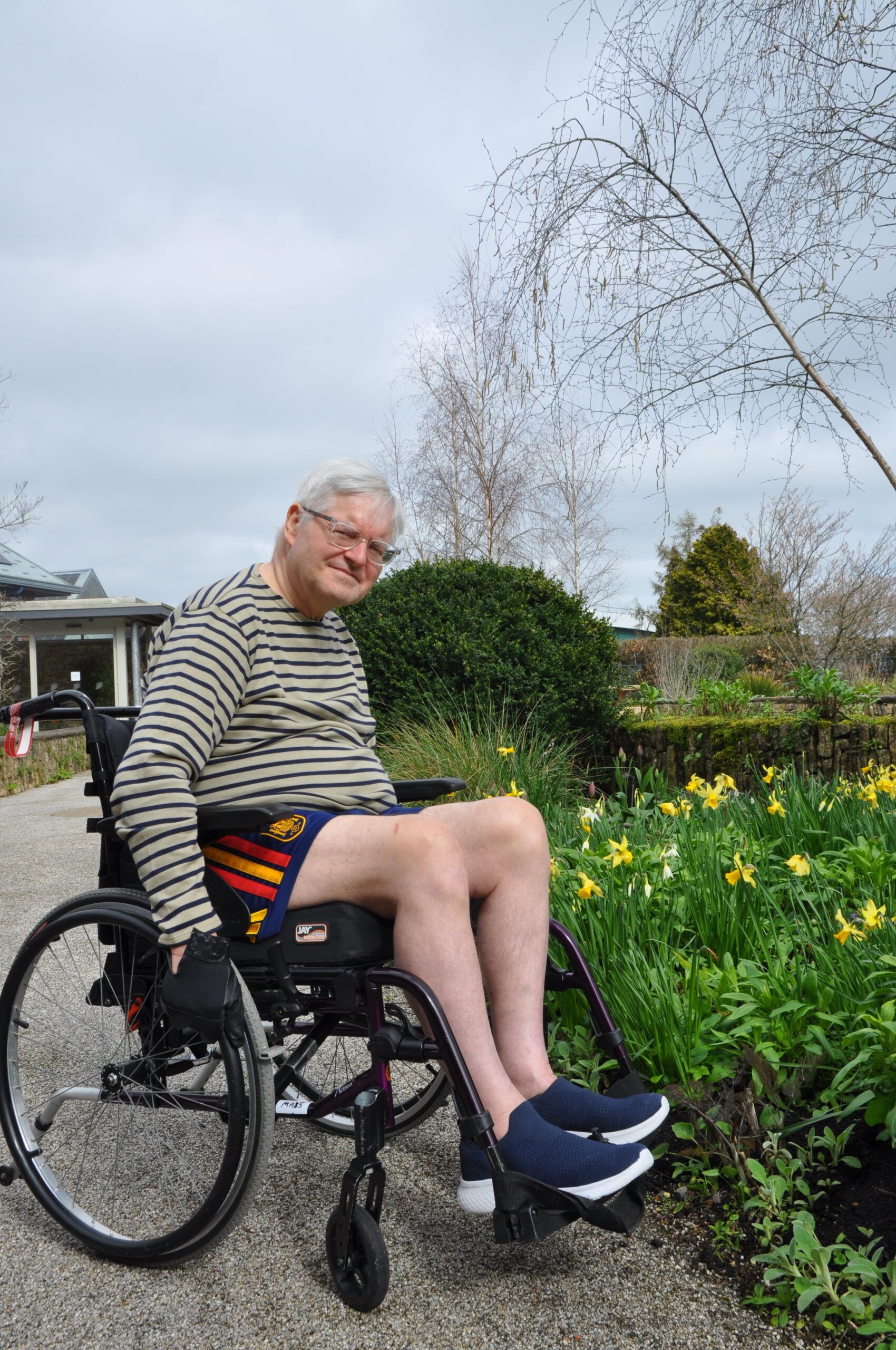
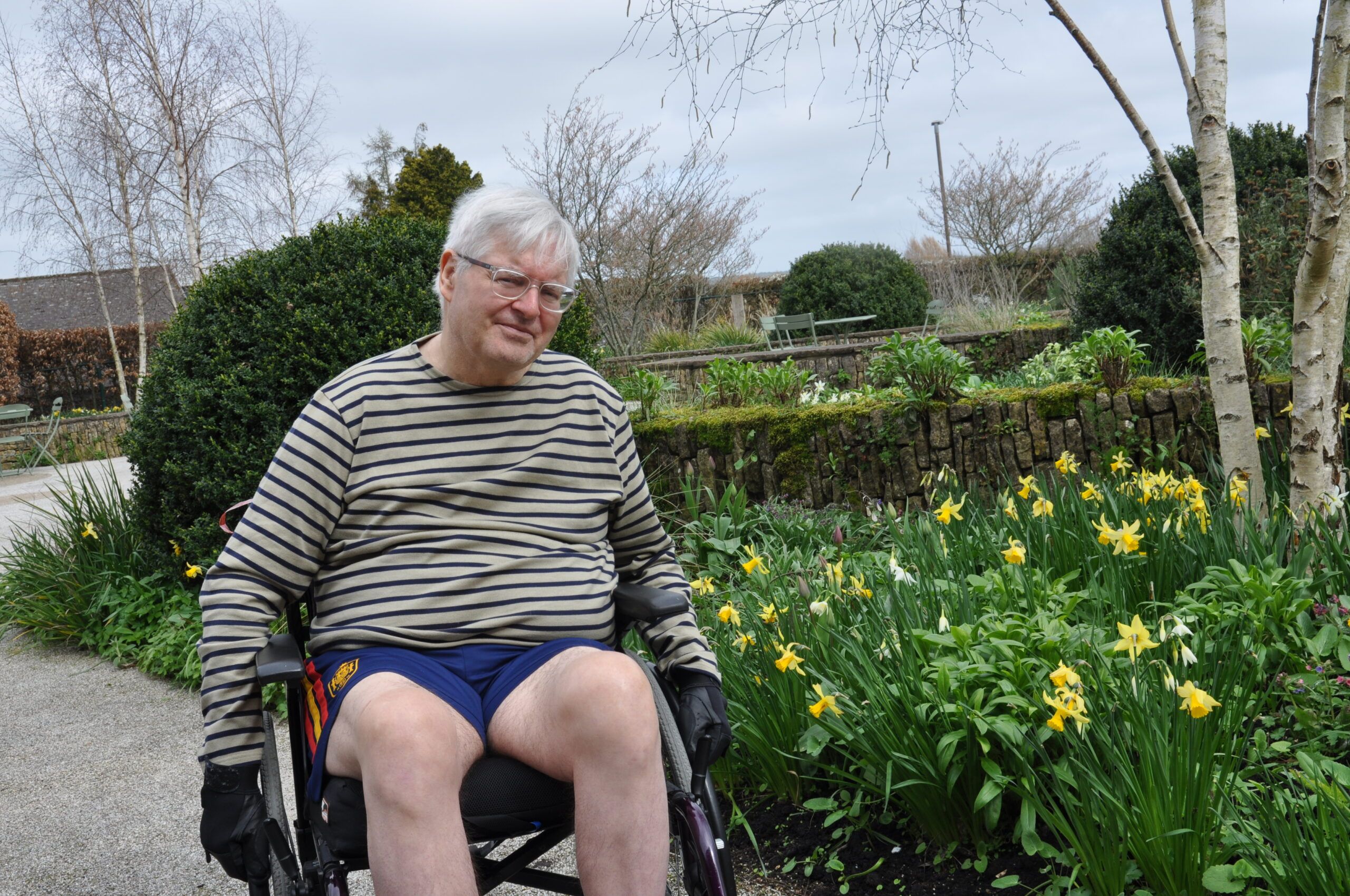
Then I discovered Horatio’s Garden, and it made an extraordinary difference to my recovery. Simply being outside, in the sunlight, reminded me that there was still a world beyond the ward, one I needed to reconnect with.
I now come here every day. I listen to the birds, push myself along the paths, and hope that one day soon I’ll be able to walk around the garden. I’ve even planted Siberian tomato seeds in the greenhouse and watched them grow – something I never expected to enjoy! I often joke that the greenhouse feels like the operations room of a warship: busy, purposeful, always something new to learn.
But it’s not just the gardening. It’s the sense of community. Through music, mosaics, and shared meals, the garden brings people together – patients, families, staff and volunteers – in a way that feels deeply human.
It’s also become a special place for my family. My grandson runs freely around the garden and he can play in a way he can’t elsewhere, while we sit together, three generations, sharing Marmite and cheese sandwiches – my favourite! My daughter and her partner bring food, and we have quiet picnics. These joyful moments mean everything. They remind me what I’m working towards.
Because I’m not training to stay in hospital – I’m training to go home.
There was a time in Sydney when I didn’t know if I had a future. Now I do. Even if I don’t recover any further movement, and I believe I will, I know I can still build a full and meaningful life. Horatio’s Garden has helped make that possible. It bridges the gap between hospital and home, between who I was and who I am becoming.
Horatio’s Garden feels like a place where I can be myself again. As a former sailor, I sometimes think of it as rowing back to myself – my new self, and the future.