


Nearly a year ago, I was in the gym when my life changed in an instant.
I had an arteriovenous malformation (AVM) in my neck, a rare tangle of veins and arteries that most people don’t know they have until it bursts. Spinal AVMs are particularly rare. Mine burst at the gym, paralysing me from the neck down and stopping my breathing. My mum performed CPR for five minutes before the paramedics arrived.
In hospital, I was placed into a coma for five days and fitted with a tracheostomy. I was transferred here to the rehabilitation centre in Wales in September and have now been in hospital for nearly a year.
At first, I was told I’d need a tracheostomy forever and remain paralysed from the neck down. Hearing that from doctor after doctor devastated me. In intensive care, that sadness slowly turned into anger.
By the time I left hospital in Bristol, I wasn’t exactly the nicest guy to be around. I was stuck in bed all day, unable to do anything for myself and frustrated by not knowing what my future held. Before my injury, life was completely different. I had finished college and had a mechanical engineering apprenticeship lined up. I trained at the gym five or six times a week, mainly weight training or swimming.
At first, I had no movement at all. Over the following months, it slowly started to return. My hands have recovered last, but considering where I started, I feel lucky to have come this far.
My family have been there throughout everything. My mum came in every day, even when I pushed her away. She sat with me, talked to me and kept showing up. So did my dad and the rest of my family. Looking back, that support meant everything.
When I arrived here, my mindset shifted. I met people in worse situations who were still smiling. It made me think: if they could still find reasons to be positive, maybe I could too. Around then, I also discovered the garden.
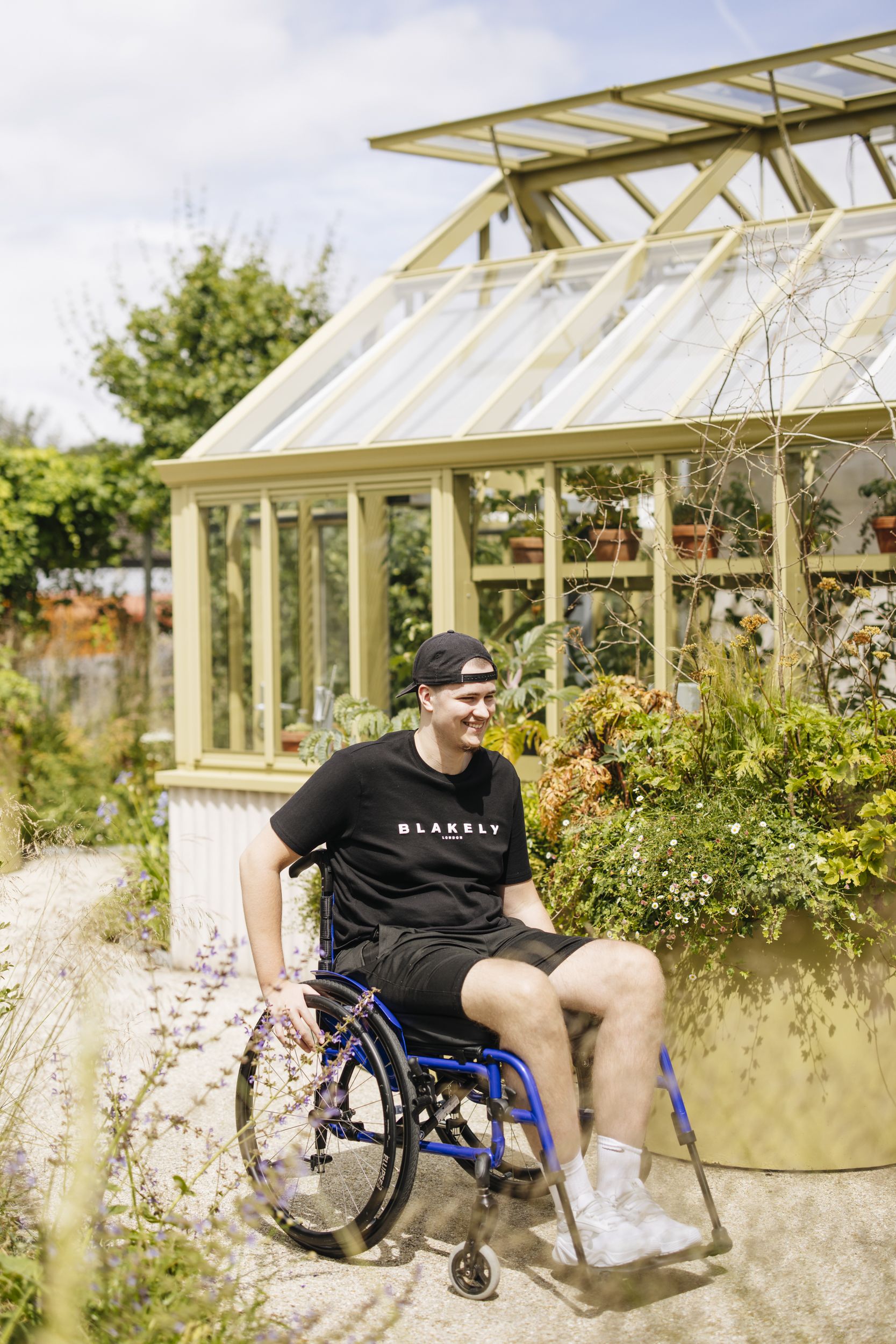
Coming here was my first fresh air since entering hospital. I had barely been outside or spent time in my wheelchair, so that first visit felt like a real outing after months indoors. After three months inside, it felt amazing. An open window is not the same as fresh air and sun on your face.
The garden is a completely different environment. Inside, the hospital is noisy and busy; out here, it’s peaceful. It takes your mind off being in hospital.
It’s hard to separate the garden from recovery because everything goes hand in hand, but it’s definitely helped my mental health. Recovery leaves so much time to wonder what condition you’ll be in next week, next month or next year. It’s easy to get trapped in a cycle.
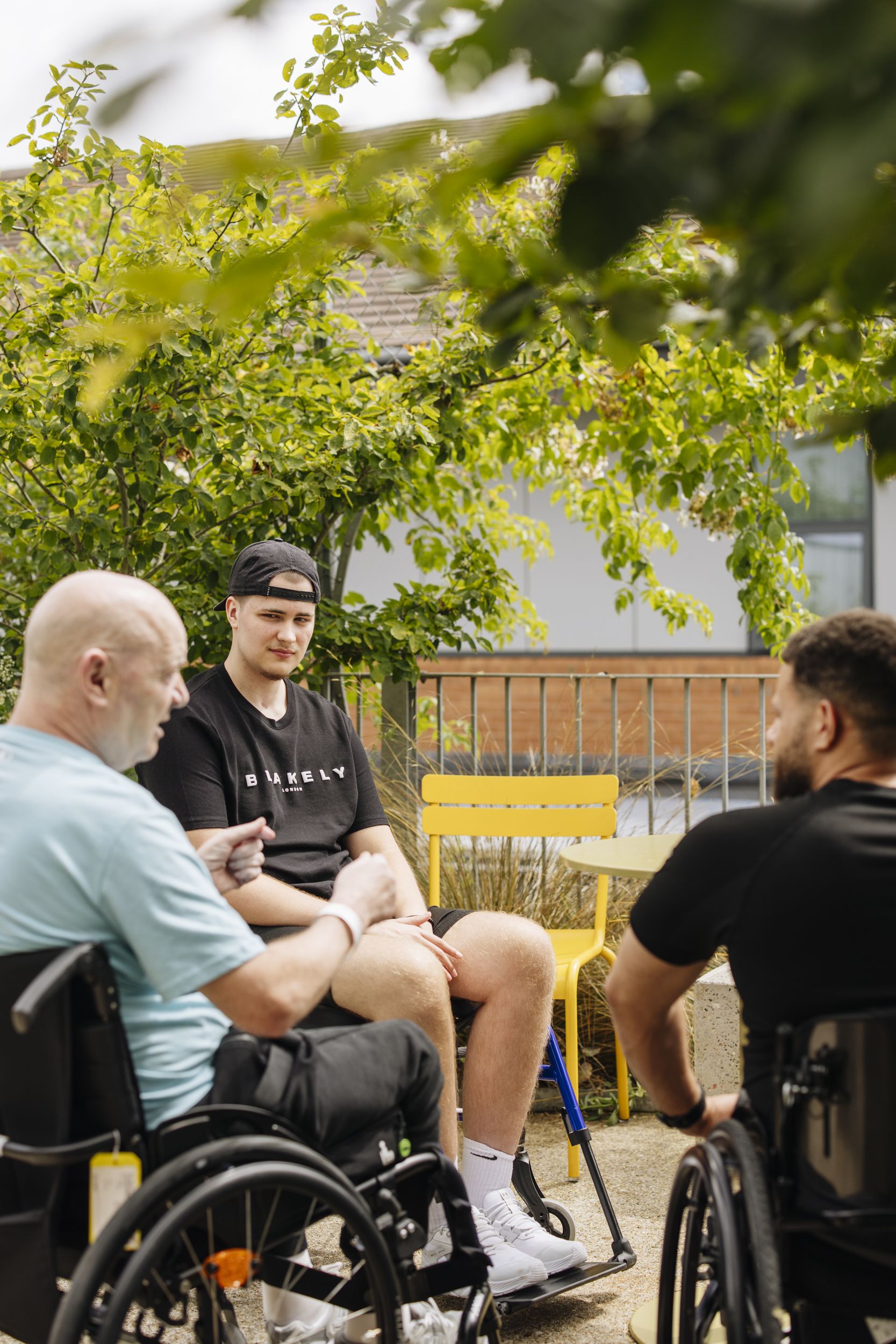
The garden breaks that cycle. Whether I’m playing chess, joining an activity, chatting with other patients or simply sitting quietly, it gives me something beyond my injury to focus on. It’s also helped me to meet people. Most of my first conversations with other patients happened here, where everyone comes together and talking feels natural.
My favourite spot was shown to me by an ex-patient called Callum, who always sat under the same tree near the entrance. After he left, I carried on sitting there. So many conversations have happened around that tree; it’s nice that the spot has been passed from patient to patient.
My injury has changed my future, but it’s also helped me discover a new direction. Because of my hands, I don’t think I can take up my apprenticeship. Instead, I’m exploring becoming a personal trainer for people with disabilities. I’d love to work with people with spinal cord injuries and other disabilities. There aren’t many disabled personal trainers, and I’d love to help change that.
For now, I’m focused on recovery. It’s been a long year, with sadness, anger and frustration – but also progress, friendship and hope.
The garden has played a huge role in that. It gave me my first experience of being outside again, helped me meet people and brought me peace when I needed it most. More than anything, it gave me a sense of normality at a time when nothing else felt normal.