


It was the end of July, and my family and I had spent a spontaneous day at the beach enjoying salt-water swims into the summer evening. As we drove through woodland on our way home, we encountered a deer, which my husband instinctively tried to avoid as it darted out from the trees. Our car left the road, rolling down a bank and causing me to break my neck.
Although I don’t remember a lot of the accident, my husband witnessed it all – from the arrival of paramedics on scene to the end of my two-week stay in intensive care. I try not to use the work tetraplegic too much as I think it sounds limiting, but as a result of the accident, I lost the use of my legs and ends of my fingers.
I’m an architect, and as someone who enjoys variety in life, I’ve worked on everything from small domestic projects to large office refits. I have two sons and a husband, and I love the outdoors: walking, nature, fresh air, big skies, and spending time in my garden.
However I was confined to my bed for three months before I came to the National Spinal Injuries Centre at Stoke Mandeville. Until then, my memories of hospital were bright lights, blue surroundings and a feeling of being closed in by the walls around me. Going outside is normally the first thing I do in the morning, so being unable to open the back door and breathe in the rain or feel the wind was hard.
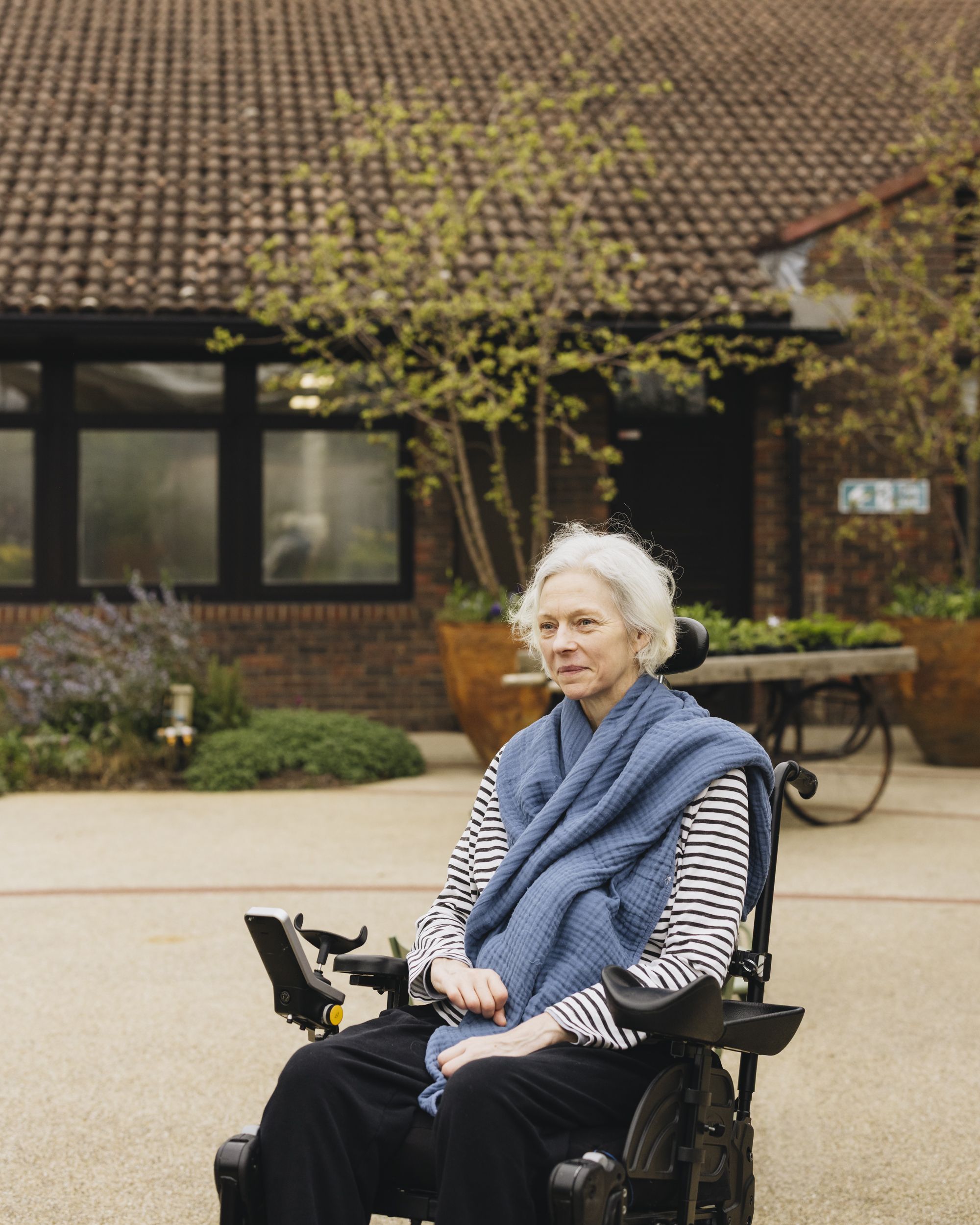
It was a joyous moment discovering that the centre had a Horatio’s Garden. Even through winter, it meant I could take a moment to come outside, study the leaves and textures, and find a feeling of rhythm and calm. A moment away from the greyness and beeping and rush of the ward. It’s hard to explain how much it’s given me. It’s a gem, just beautiful.
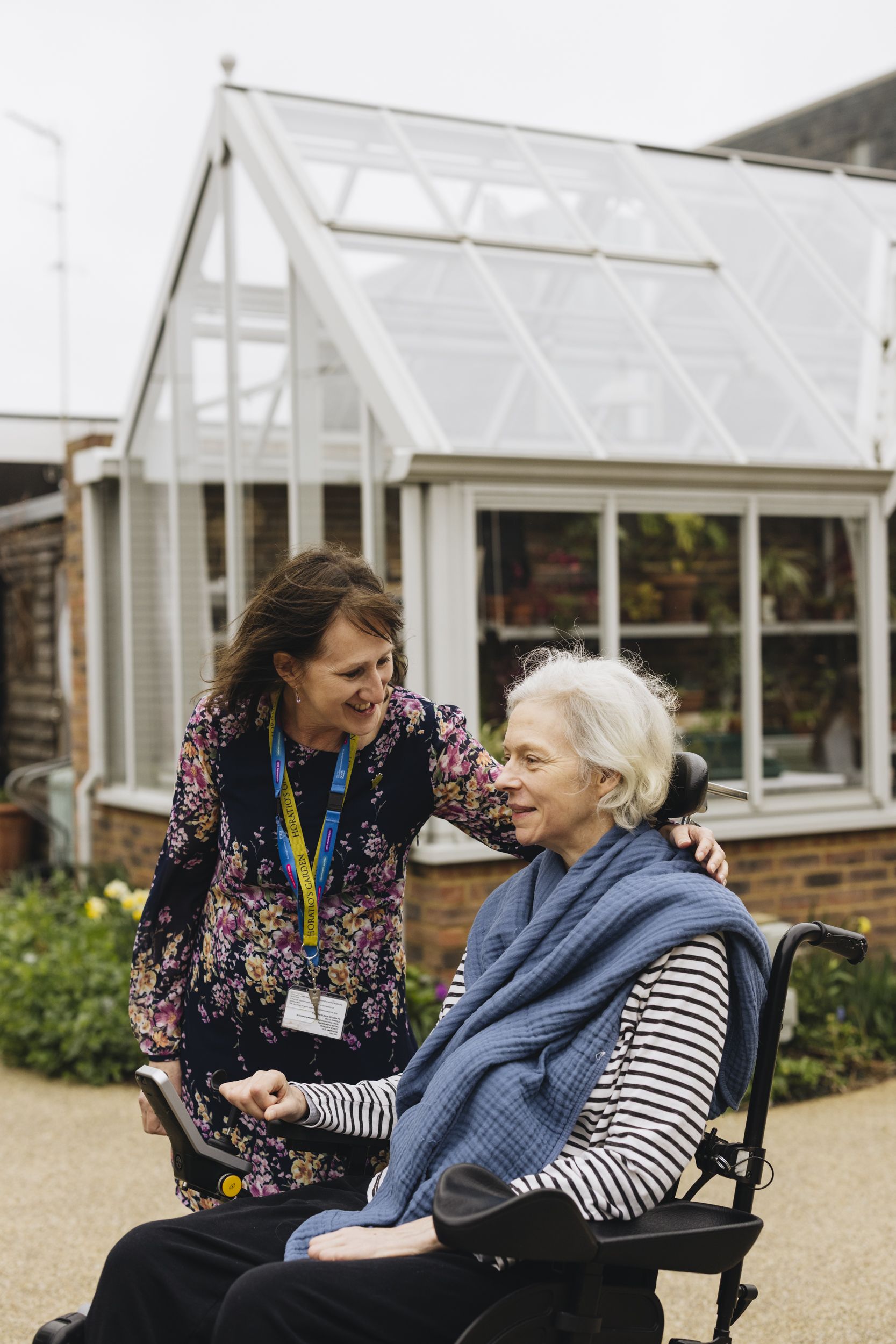
The garden room also provides a great sense of normality. I’ve brought my family and friends in to enjoy lunch or a cup of tea, and for my children (who are grown-ups!) it felt like Christmas Day with board games and all kinds of cake. The room brings people together, and the volunteers do an amazing job of making everyone feel included, creating a space that feels like a hug.
You can sit quietly or join in with weekly workshops. I’m a little limited with what I can do with my hands, but doing something creative makes me feel more like myself and encourages a meditative calmness. Drawing, ceramics and glass workshops brought out a gentle happiness which has helped me overcome the frustration of not being able to do a task the way I would’ve done it in the past. That inhibition has gone and I’m exploring new ways of doing things – holding something differently or just enjoying the moment. It’s a surprise that I’ve got past the self-consciousness. Workshops make you feel like things are not impossible, that surprises do emerge, and I try to carry that with me.
Seeing the garden change each day has helped my mind more than anything. The clouds are different, the air is different, the rain is more or less, the leaves grow and the flowers are beginning to come out. Unintentionally, I found that observing the colours and textures of everything helps you switch off from the trauma that you, and the people around you, have gone through. It’s an escapism that’s green, colourful, wet, windy and warm. Springtime has brought optimism through snowdrops, blossom and new leaves, and this growth and change is reflected in life, I think.
It’s not easy to imagine that there might be a reason why my injury happened, but I owe it to my friends, my family and myself to keep trying. Although I have wobbly moments, I’m not ready to give up. There are too many things I want to do and see.
The garden is where I feel the most at home in the hospital, and I think that every hospital and office should have one. We should all have a green space where we can feel like ourselves and take time out from the world.
Watch Deb’s story here.